Rupee at 8-month high: what it means if you send or spend dollars
The rupee just hit ₹92 to the dollar and big investors are betting on it again for the first time in 18 months. Here is what that means for money sent home, fees abroad and travel.
What happened
For the first time in 18 months, big currency investors are betting on the Indian rupee to get stronger instead of weaker. A Reuters poll released on 26 November 2026 showed that bets on the rupee are at their highest since early May 2025.
Two things drove the change. Foreign investors put more than $14 billion into Indian shares in November alone, after taking out about $31 billion in the first ten months of the year. Crude oil also got cheaper, which matters because India buys most of its oil from abroad and pays for it in dollars.
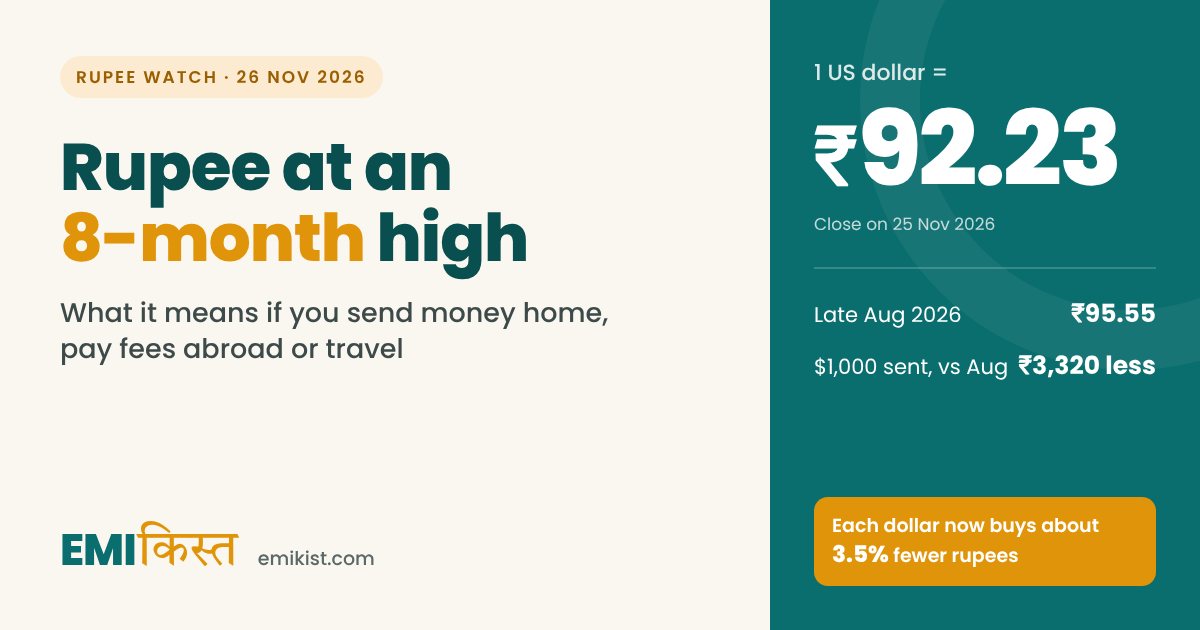
The rupee followed. On 25 November it closed at about ₹92.23 to the dollar, its strongest level in eight months. In late August it was around ₹95.55.
Meanwhile, sentiment went the other way for India's neighbours. Investors increased bets against the Indonesian rupiah, which hit a record low of about 18,395 to the dollar, and also against the Thai baht and Philippine peso.
What it means for your money
A stronger rupee means one dollar buys fewer rupees. Here is the same transfer at the August rate and at the 25 November rate:
- $1,000 sent home in late August: ₹95,550
- $1,000 sent home on 25 November: ₹92,230
- Difference: about ₹3,320 less for the family in India, roughly 3.5%
It works the other way when you pay in dollars. ₹1 lakh bought about $1,047 in August. Now it buys about $1,084.
Who gains and who loses
- Students abroad and their parents: A $20,000 fee cost about ₹19.11 lakh at the August rate. At ₹92.23 it costs about ₹18.45 lakh, a saving of roughly ₹66,400.
- Travellers going abroad: Dollars, and currencies that follow the dollar, are a bit cheaper now.
- Importers: Oil, electronics and machinery bought in dollars cost less in rupees.
- NRIs sending money home: Each dollar now brings home fewer rupees than it did a few months ago.
- Exporters and freelancers paid in dollars: Their dollar income converts into fewer rupees.
I have seen families wait for months to get a 'better rate', and in that time the rate moved against them. Waiting for a few paise often costs more than it saves.
What you can do
Nobody can tell you where the rupee will go next, and even the experts disagree. Some foreign bank strategists expect the rupee to strengthen to 90, 91 before the RBI steps in. Others expect it back at 95, 96 within a year, and Barclays analysts called the recent gains "tactical". So plan for both cases instead of betting on one:
- Sending money home? If you need it, send it. If you don't, splitting a big transfer into a few smaller ones spreads out the rate risk.
- Paying fees abroad? Note the fee deadline and convert in parts as it gets closer, instead of all on one day.
- Compare the full cost. Look at the exchange rate you get plus the fee, not only the "zero fee" label. A poor rate can cost more than a fee.
- Check the live rate first. Put your amount into our USD to INR converter just before you send or pay.
This article explains currency moves. It is not advice to buy or sell any currency.
Work out your own numbers with the USD to INR on EMIकिस्त.
Sources
Written by Emi किस्त for EMIकिस्त. Articles are for general information only, not financial advice. Disclaimer